Advertisement
Quantum computing has moved beyond theory and is now a practical field. It is now a developing field with practical applications. Governments, tech firms, and researchers are all making significant investments in its advancement. Qubits are used in next-generation computing as opposed to binary bits, which are used in classical computing. Stronger computational models and quicker problem-solving are made possible by qubits.
Sectors such as cybersecurity, healthcare, and finance are exploring the use cases of quantum computing. However, accessibility, error correction, and stability remain challenges. Progress is uneven worldwide, with stronger infrastructure and funding enabling some regions to advance more rapidly. The field presents technical hurdles but also promising avenues for breakthroughs. Knowing the technology's current state enables us to predict future developments and where breakthroughs may occur.

Unlike classical bits, qubits can exist in multiple states at once. Classical bits represent either 0 or 1. On the other hand, qubits can simultaneously represent several states. We refer to this characteristic as superposition. Entanglement is another key concept, where qubits remain linked even when separated. Together with superposition, it gives quantum systems immense computational power, enabling certain problems to be solved far faster than with conventional methods.
For instance, material design or logistics optimization issues could profit. Just as logic gates handle classical bits, quantum gates handle qubits. Quantum algorithms use unique properties to achieve efficiency. Understanding these foundations is essential to unlocking the field's potential. Without them, this field may seem abstract; however, simplifying the basics makes the subject accessible to a broader audience, even those beyond advanced physics.
In recent years, technology has made numerous significant advancements. The development of scalable quantum processors is a competition among major tech firms. Using a specific task, Google asserted quantum supremacy in 2019. IBM and other companies continue to release more powerful quantum systems. Academic institutions also contribute by disseminating novel algorithms and techniques for error correction. Around the world, governments spend billions on quantum research initiatives. Early-stage quantum tools are being utilized in pilot projects across various sectors, including finance and pharmaceuticals.
Despite these limitations, results show strong potential for real-world applications. More people have access thanks to developments in cloud-based quantum platforms. Researchers can remotely test algorithms without the need for quantum machines. Innovation is accelerated by expanding partnerships between industry and academia. Commercial-scale benefits remain uncertain, but the field is moving toward wider adoption. Despite considerable momentum, genuine progress still requires time and resources to achieve.
Major challenges limit real-world applications of quantum computing. Qubit stability is a significant obstacle. Errors occur because qubits are highly sensitive to environmental noise. Maintaining coherence over extended periods can be very challenging. There are error correction techniques, but they require a significant number of extra qubits. Hardware scalability remains a major challenge, as building larger quantum systems requires new engineering breakthroughs. High costs also limit progress, as machines and research require substantial investment.
In addition, the shortage of trained professionals in quantum theory and engineering highlights a critical skills gap. Lack of standardization makes it more difficult to compare systems from different providers. Future quantum systems could crack current encryption, raising security concerns as well. These difficulties demonstrate that adoption takes time, even with exciting advancements. International cooperation, investment, and teamwork will be necessary to overcome these obstacles. For widespread adoption across industries, these problems must be resolved.

Businesses are already investigating how quantum systems might alter their operations. Quantum algorithms in finance promise quicker portfolio optimization and risk modeling. Healthcare organizations study protein folding and medicine discovery using quantum technology. Industries are testing a wide range of quantum applications. Supply chain firms explore delivery route optimization, while energy companies model materials for renewable technologies. Cybersecurity teams analyze threats and defenses, and automotive and aerospace sectors simulate advanced designs. Many of these projects run on cloud-based quantum platforms, allowing companies to gain early experience and prepare for future opportunities.
Companies are aware of the opportunity to obtain a competitive edge. They could take the lead in the impending quantum era if they adopt early. There are currently few practical applications, but experimentation yields invaluable experience. When technology advances, industries can better prepare for eventual large-scale deployment by investigating applications.
The development of Quantum-based processing is a global competition between companies and nations. The US makes significant investments through both private businesses and government initiatives. China also invests a lot of money in an effort to become a leader in the field. European countries coordinate their efforts with robust funding and research programs. With specialized research centers, Australia, Canada, and Japan advance. Governments view Quantum technology as strategically important for competitiveness and national security.
International partnerships are formed to align standards and exchange knowledge and expertise. But research priorities are also influenced by geopolitical competition. Policies regarding export restrictions, data security, and talent development have a significant impact on growth. Although rivalries often make the news, international cooperation remains vital. The pace of progress could be shaped by striking a balance between cooperation and competition. The goal of policymakers is to prevent their countries from falling behind. Strong research and supportive regulations may be necessary for future leadership.
The state of quantum computing is both exciting and difficult. Companies and researchers continue to make progress, but challenges still exist. Industries are already using pilot projects to test quantum systems. Governments acknowledge the significance of strategic investment. Mainstream adoption remains limited by challenges such as error correction, scalability, and cost. Yet with strong funding and global interest, progress continues. Over the next decade, broader applications are likely to emerge. By understanding the current landscape, we can better prepare for its impact. Quantum computing holds the potential to transform global technological development.
Advertisement

Ahead of the curve in 2025: Explore the top data management tools helping teams handle governance, quality, integration, and collaboration with less complexity

Learn the top 8 Claude AI prompts designed to help business coaches and consultants boost productivity and client results.

Is self-driving tech still a future dream? Not anymore. Nvidia’s full-stack autonomous driving platform is now officially in production—and it’s already rolling into real vehicles

How machine learning is transforming sales forecasting by reducing errors, adapting to real-time data, and helping teams make faster, more accurate decisions across industries
Advertisement

What happens when ML teams stop juggling tools? Fetch moved to Hugging Face on AWS and cut development time by 30%, boosting consistency and collaboration across projects

Learn how ZenML helps streamline EV efficiency prediction—from raw sensor data to production-ready models. Build clean, scalable pipelines that adapt to real-world driving conditions
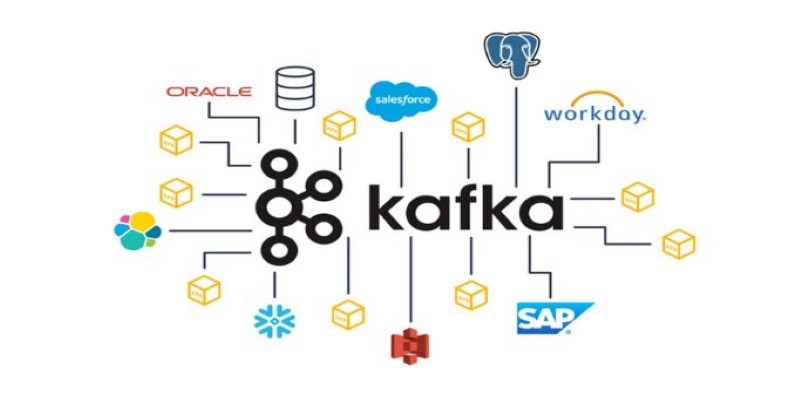
Explore Apache Kafka use cases in real-world scenarios and follow this detailed Kafka installation guide to set up your own event streaming platform
IBM Plans $150B Technology Investment in US, focusing on semiconductors, AI, quantum computing, and workforce development to strengthen innovation and create jobs nationwide
Advertisement

Open models give freedom—but they need guardrails. Constitutional AI helps LLMs reason through behavior using written principles, not just pattern-matching or rigid filters

Intel and Hugging Face are teaming up to make machine learning hardware acceleration more accessible. Their partnership brings performance, flexibility, and ease of use to developers at every level

Learn how to use ChatGPT for customer service to improve efficiency, handle FAQs, and deliver 24/7 support at scale

Rockwell Automation introduced its AI-powered digital twins at Hannover Messe 2025, offering real-time, adaptive virtual models to improve manufacturing efficiency and reliability across industries