Advertisement
The demand for data scientists is increasing daily, but so is the competition. With thousands of graduates entering the market each year, getting your dream role in the field is no longer about having a degree. Employers are looking for candidates who excel in both technical and non-technical skills.
To truly stand out in this crowded field and position yourself as the ideal candidate, you should develop a T-shaped skill set, build unique projects, and surprise your interviewers with your online presence. If you want to learn these simple yet effective strategies in detail, keep reading!
The following are the ways you can implement in your life to stand out as a data scientist in the job market.
A T-shaped skill set refers to two dimensions, the horizontal bar and the vertical stem. The horizontal bar represents breadth. It encompasses a broad understanding of topics across the field, including modeling, communication, visualization, and data wrangling. The vertical stem represents depth. It means having a strong expertise in a specific area, for example, machine learning, statistics, and data engineering. Many entry-level data scientists develop a strong foundation across nearly all areas of data science. However, those who specialize, whether in scalable data systems, statistical inference, or business domain expertise, often stand out more to employers. Resumes that demonstrate T-shaped capabilities through hands-on projects, research, internships, or specialized coursework capture the attention of recruiters.
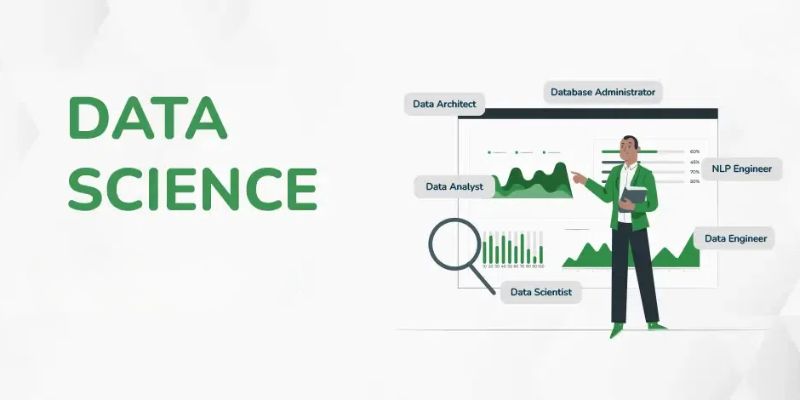
One way to effortlessly stand out as a data scientist is to create something that attracts what you want, rather than spending energy chasing it. You can use the internet to your advantage and create an online presence. Recruiters will reach out to you without you having to look for a role. A good resume is still valuable. However, are your other profiles looking great? Is your personal website and LinkedIn active and optimized? Are you regularly posting? It is essentially building a "personal brand", though this term is often thrown around, but it is still important. Here's how you can do it.
Create a project that shows off your ability to build models, clean data, and visualize results using real-world data sets. Create something that intrigues the interviewers, and they become more engaged in learning about your work. Try to solve business problems aligned with your target industry, build interactive reports and dashboards to include in your portfolio. One way to do this is to develop a project you think you won't be able to do, but you do it anyway. You will learn that everything can be figured out in the end. Don't just build a model in a Jupyter notebook; instead, make it more interactive and engaging. You should add some unit tests and make them align with software engineering best practices. You should build a monitoring dashboard that can be accessed online. Also, you can store historical predictions in a database. You should deploy the model on a cloud provider like AWS. Try to figure out a way to make live predictions. You are deploying and monitoring your model from end to end. This type of project can be significantly difficult. Still, it offers improved quality compared to any static model in a notebook.
You need both non-technical and technical skills to succeed as a data scientist. Master the skills such as machine learning, statistics, and programming. Develop strong communication skills and learn to work effectively and coordinate with others to achieve your goals. Communication skills and teamwork become even more important as you move into a leadership role. Hands-on experience and continuous learning can help you stay ahead of other applicants.
Technical Skills That You Should Master:
Non-Technical Skills You Need To Master:
Networking is well-known, yet it is much underrated. If you know anyone working in the field, such as a friend, family member, or former colleague, use that connection as a reference. The worst that can happen is they may say no, but you move on. If you have background knowledge relating to finance, marketing, medicine, or anything unrelated to tech, use that to your advantage. Since you already have the domain knowledge in a specific area, it can complement your data. You can apply for a position in that business industry, and you will easily stand out since you have the domain knowledge. Everyone wants to work in bigger companies, and it is good to be motivated. However, if you live in a small city and are a beginner, consider going to local and small companies nearby. You will gain experience and learn a great deal, all in a less competitive environment.
Securing your dream job can be a challenging task, as thousands of applicants are already competing for the desired position. Therefore, the only way to secure a successful career in this crowded marketplace is to differentiate yourself. For that, you must develop a T-shaped skill set by having a broad understanding of different topics and in-depth knowledge about a specific area. Build a solid online presence to attract employers, develop cool projects, and improve your skills (both technical and non-technical). If you have extensive networking and job background, take advantage of that. If you are a beginner, don't hesitate to join small companies in your city to gain experience and enhance your portfolio.
Advertisement

ChatGPT Search just got a major shopping upgrade—here’s what’s new and how it affects you.

Discover the top 10 AI voice generator tools for 2025, including ElevenLabs, PlayHT, Murf.ai, and more. Compare features for video, podcasts, education, and app development

What happens when ML teams stop juggling tools? Fetch moved to Hugging Face on AWS and cut development time by 30%, boosting consistency and collaboration across projects

Find the top eight DeepSeek AI prompts that can accelerate your branding, content creation, and digital marketing results.
Advertisement

AI content detectors don’t work reliably and often mislabel human writing. Learn why these tools are flawed, how false positives happen, and what smarter alternatives look like

Tired of reinventing model workflows from scratch? Hugging Face offers tools beyond Transformers to save time and reduce boilerplate

Explore the current state of quantum computing, its challenges, progress, and future impact on science, business, and technology

Learn how ZenML helps streamline EV efficiency prediction—from raw sensor data to production-ready models. Build clean, scalable pipelines that adapt to real-world driving conditions
Advertisement

A leading humanoid robot company has introduced its next-gen home humanoid designed to assist with daily chores, offering natural interaction and seamless integration into home life
Explore what large language models (LLMs) are, how they learn, and why transformers and attention mechanisms make them powerful tools for language understanding and generation
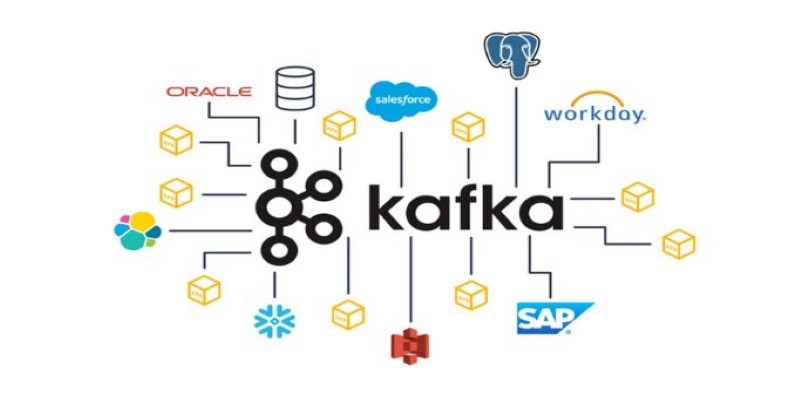
Explore Apache Kafka use cases in real-world scenarios and follow this detailed Kafka installation guide to set up your own event streaming platform

What happens when two tech giants team up? At Nvidia GTC 2025, IBM and Nvidia announced a partnership to make enterprise AI adoption faster, more scalable, and less chaotic. Here’s how